
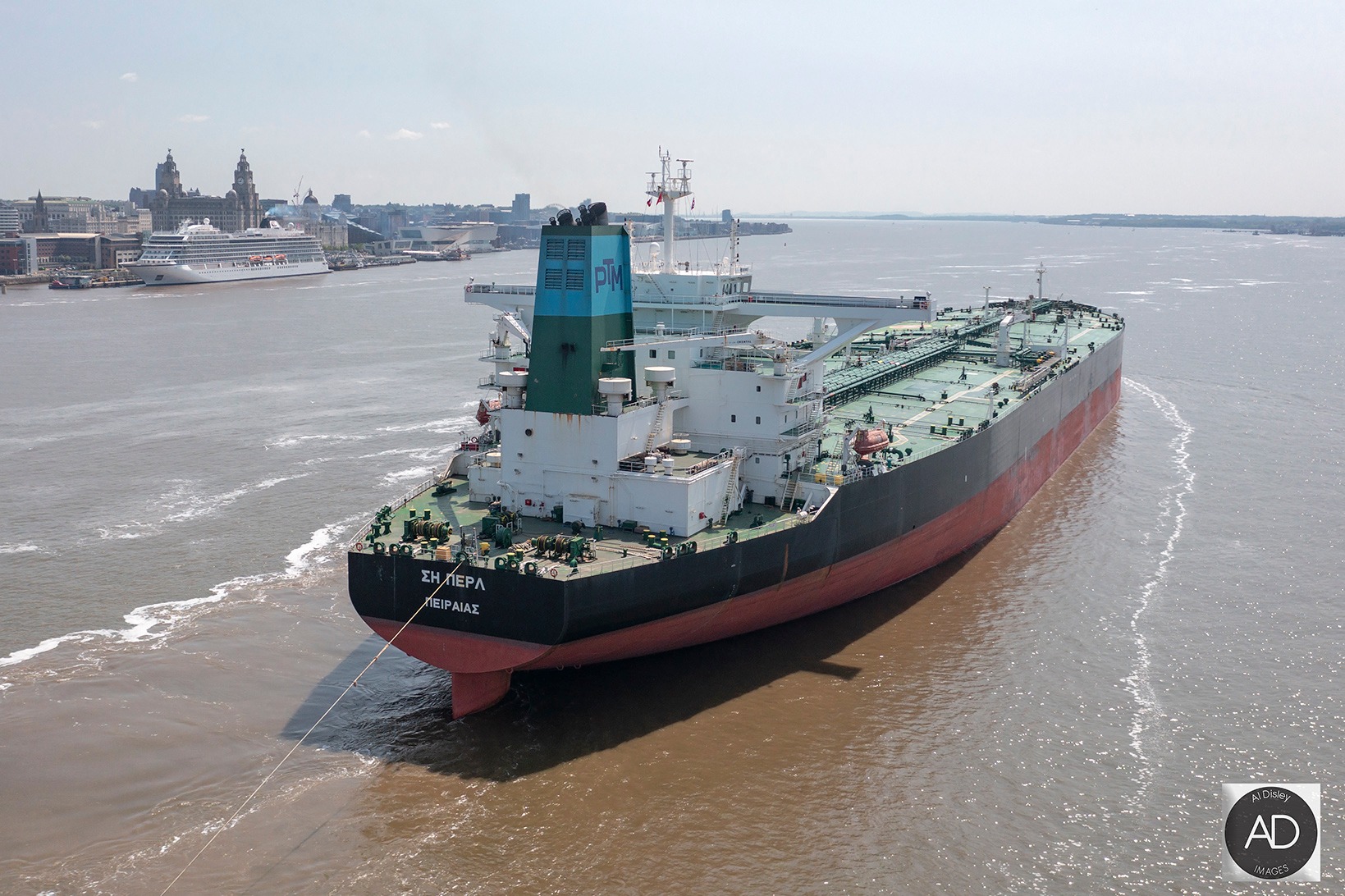
Liverpool’s maritime industry is helping the city-region’s economic recovery, according to a new report commissioned by Liverpool John Moores University’s Global Centre for Maritime Innovation.
In 2025, the Liverpool City Region’s maritime sector generated £3.4 billion in business turnover or output, a 25.1% growth from £2.72bn in output in 2023. Employment grew by 18.9% over the same period, against a backdrop of stagnant jobs growth across the UK economy.
The UK Minister for Maritime Keir Mather, MP welcomed the report saying: “Maritime powers the industries of coastal communities like Liverpool – creating jobs, driving growth, and opening career opportunities for local people.”
The report, titled ‘Economic Impact Assessment of the Liverpool City Region Maritime Sector’ was conducted by the Centre for Economic and Business Research, and trailed at London Shipping Week by the Director of the LJMU Global Centre for Maritime Innovation Dr Christian Matthews and Dr Aileen Jones, LJMU’s Pro Vice-Chancellor for External Engagement and Partnerships.
It concludes:
- The aggregate output of the sector has increased from £5.6bn in 2023 to £9bn in 2025 and the sector employs 48,000 at its broadest (up from 45,984 in 2023).
- The maritime sector directly contributed £1.16bn in Gross Value Added (GVA) to the Liverpool City Region in 2025 (reflects average annual growth of 12.6% between 2023 to 2025)
- Shipping and maritime business services are strongest drivers of maritime GVA contributions, directly generating 40.3% of maritime GVA in 2025.
- LCR’s maritime sector generates total output (business turnover) of £3.40bn in 2025, increasing 25.1% from £2.72bn in output generated in 2023.
- 10,901 workers are directly employed in the LCR maritime sector in 2025 – 41% (4,472) of which are employed in shipping.
- LCR maritime employment has grown at an average annual rate of 9.1% between 2023 and 2025, against a backdrop of stagnant employment growth across the UK economy.
Dr Robyn Pyne, Principal Lecturer at LJMU’s Global Centre for Maritime Innovation, said: “The data from this report very much confirms what many observers have been saying for a while; that the industry is going from strength to strength; and that is good news for local prosperity and for local jobs.
“Much is made of Liverpool’s past as a trading port and commercial hub but there is very much a present and future to be built because the opportunities are here and now.”
The report also found:
- The Port of Liverpool facilitated goods exports of £11.5bn in 2024, up from £10.9bn in 2023. Represents strong annual growth of 6.2%, particularly in context of UK-wide goods exports declining 5.1.
- The Port of Liverpool processed £16.9bn in goods imports in 2024, growing 11.3% from £15.2bn processed in 2023.
Steve Rotheram, Mayor of the Liverpool City Region, said: “As a coastal region, the maritime sector has always been in our city region’s DNA – it built our past, and it has a massive tole to play in shaping our future too.
“This is a timely report, following on from the publication of the Combined Authority’s Local Growth Plan, which identified maritime as a key growth sector. The figures speak for themselves; the sector is booming!
“Our maritime sector is a brilliant example of what we can achieve when local talent, world-class innovation and bold ambition come together – thousands of jobs and billions of pounds of economic value for the local economy.”
Ruth Wood, CEO of Mersey Maritime, said: “This new report highlights the vital role maritime plays in the Liverpool City Region, across the wider North West and nationally. Few industries here directly deliver £3.4 billion in business turnover and £1.16 billion in GVA locally.
“These figures represent thriving maritime businesses, skilled careers and bold innovation. We’re proud to champion the LCR maritime industry and excited for what the future holds.”
Maritime Minister, Keir Mather said: “Liverpool’s own maritime sector adds billions to the local economy, and we want to see that grow. That’s why we’re backing the UK’s maritime sector with £448 million to attract investment across the country and secure the jobs for the future this sector will provide.”
LJMU has been teaching maritime professionals, both technically and commercially, to degree level, since 1967 and Dr Robyn Pyne added: “Graduates are vital to bring new thinking into a rapidly changing industry. Automation, AI, digital and legal changes all come on top of the drive for renewables and net zero technologies.”